

Customer-friendly pricing puts the customer in control.
Can your customers commit for a discount or pay as they go?
What if their usage shifts from one team or product to another?
What happens when they have an unusually busy few days?
How you handle these situations shapes your customer’s experience with you.
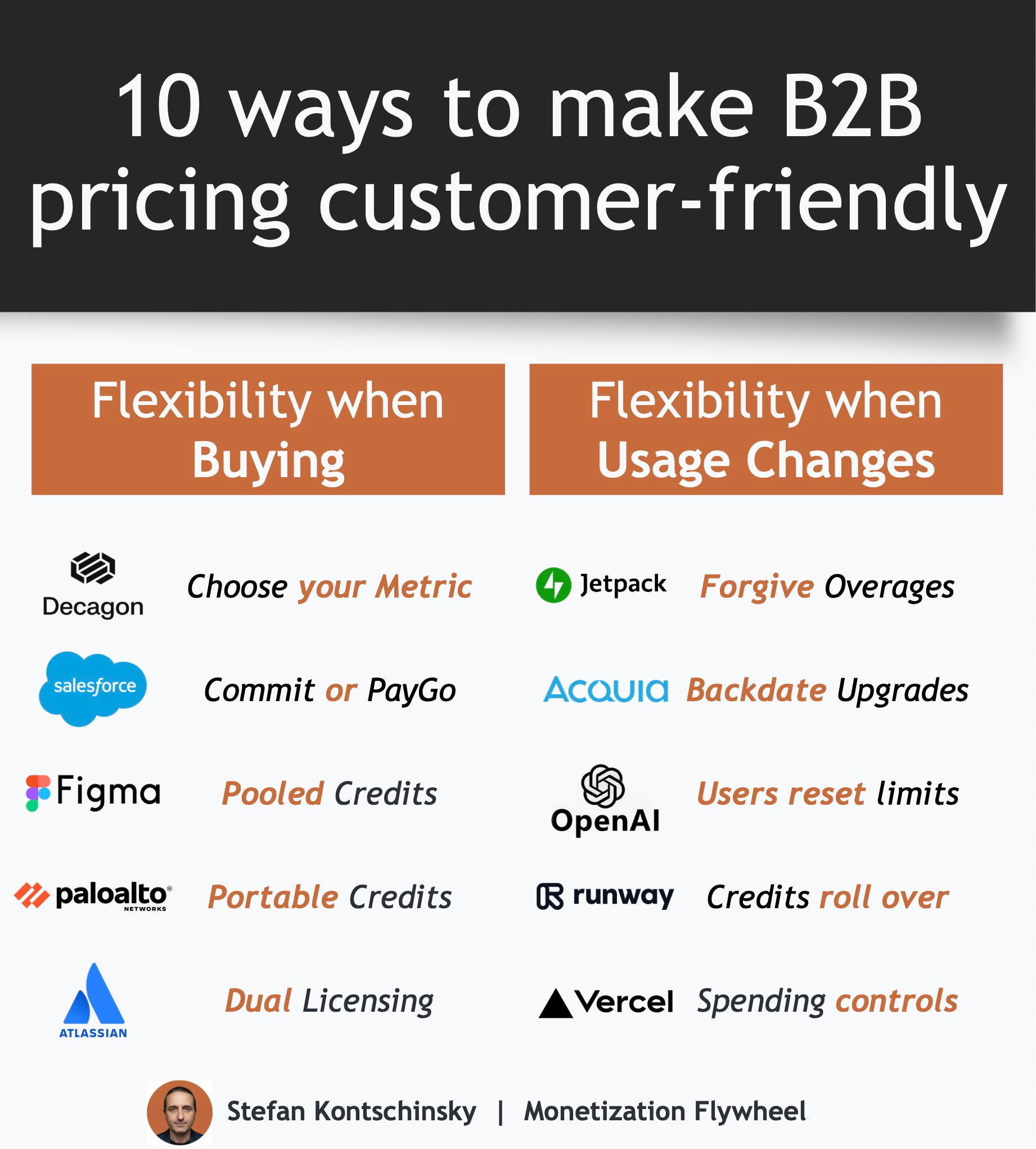
Here is what 10 SaaS and AI companies do in two areas: choices when customers buy, and flexibility when usage changes.
Give customers choices in how they buy
1. Let customers pick their pricing metric
Decagon gives customers two ways to pay for its AI agents:
Per conversation: Pay for each incoming conversation.
Per resolution: Pay a higher unit price for conversations the agent fully resolves.
Decagon says most customers choose per-conversation pricing.
Let buyers choose the metric that fits their preferences for predictability and risk.
2. Let customers choose whether to commit or pay-as-you-go
Salesforce Agentforce offers three ways to buy Flex Credits:
PayGo: Pay monthly for actual usage at list price, billed in arrears.
Pre-Commit: Commit to minimum usage for lower rates, without paying upfront. Billing is monthly and customers still owe the minimum if actual usage falls short.
Pre-Purchase: Buy credits upfront to get the highest discount.
Let customers choose the balance of flexibility, cash flow, and savings that fits their business.
3. Offer pooled credits for teams
Figma lets admins purchase a shared pool of additional AI credits. Approved users draw from it after exhausting their individual seat allowance. Admins can manage access and track team-wide credit usage in a dashboard.
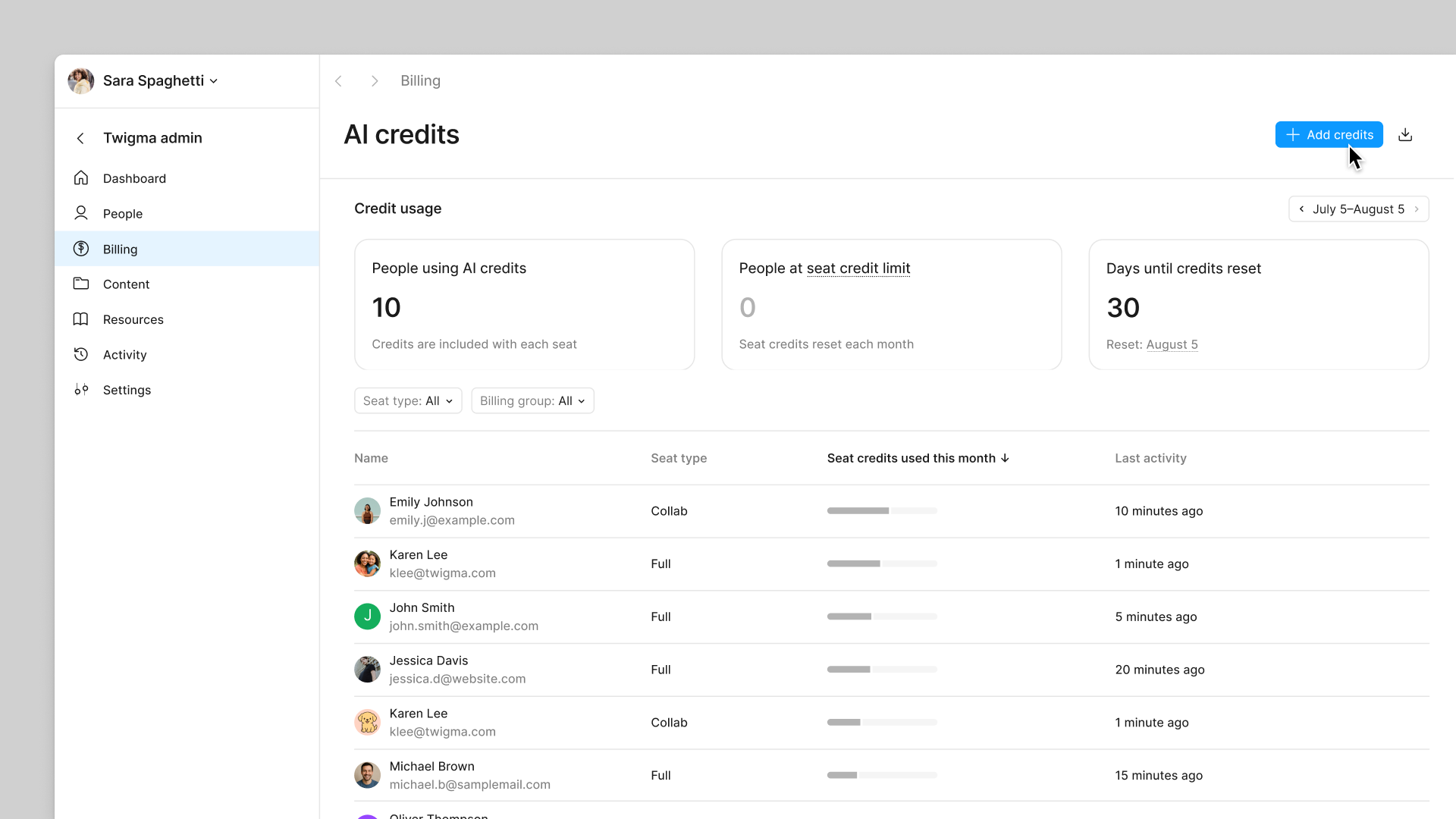
Let teams allocate capacity where it is needed without predicting every person’s usage upfront.
4. Make credits portable across deployments
Palo Alto Networks lets their customers use its Software NGFW credits across their deployments, including different cloud providers like AWS and Azure. Customers can shift allocations as their infrastructure and workloads change.
Allow customers to commit and reduce their risk of committing to the wrong product.
5. Allow dual licensing for migrations
Atlassian’s dual licensing lets eligible customers purchase an annual Cloud subscription and extend their existing Data Center license at a 100% discount for up to six months during the migration.
Customers can migrate in phases without paying full price for both products.
Add flexibility when their usage changes
6. Let overage slide until it becomes a pattern
Jetpack Stats excludes the two busiest traffic days each month when checking usage against plan limits. Paid customers must upgrade only after they exceed their limit for three consecutive months.
This leniency with clear limits avoids sizing capacity on spikes instead of typical needs.
7. Allow backdating upgrades for higher limits
Acquia Cloud Platform allows customers to backdate the effective date for upgrades to cover prior overages. Customers pay for the larger plan from its effective date, avoiding the overage fees.
This gives customers a way to correct an underestimate without the penalty of an overage.
8. Allow users to reset usage limits in the product
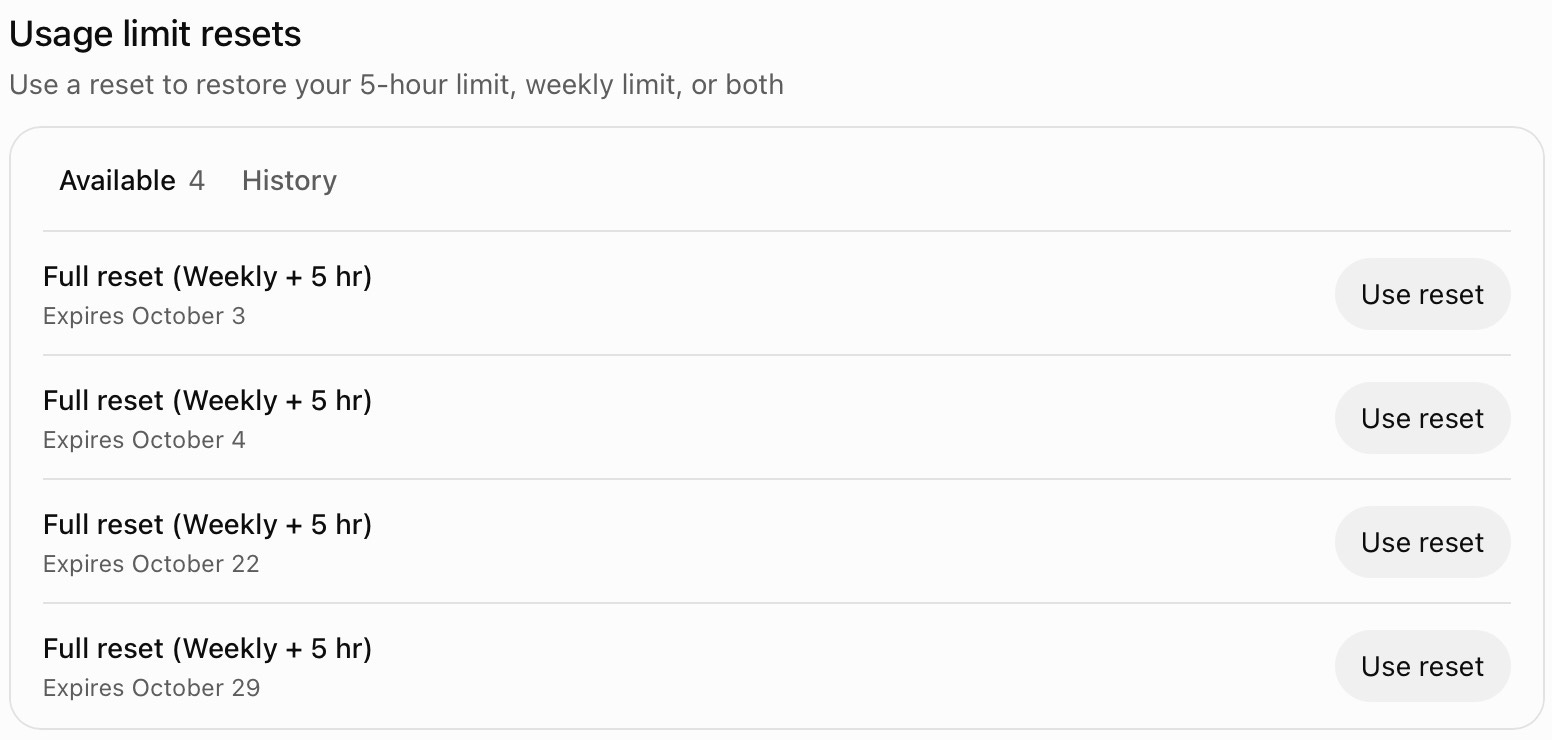
OpenAI allows Plus and Pro users to reset their weekly and 5-hour limits (for Codex, Work) when they need it. In addition to paid resets, they offer promotional resets that can be banked and have an expiration date (which avoids customers accumulating unused resets indefinitely).
These resets help users handle a temporary spike without permanently increasing their plan.
9. Allow credits to roll over a month
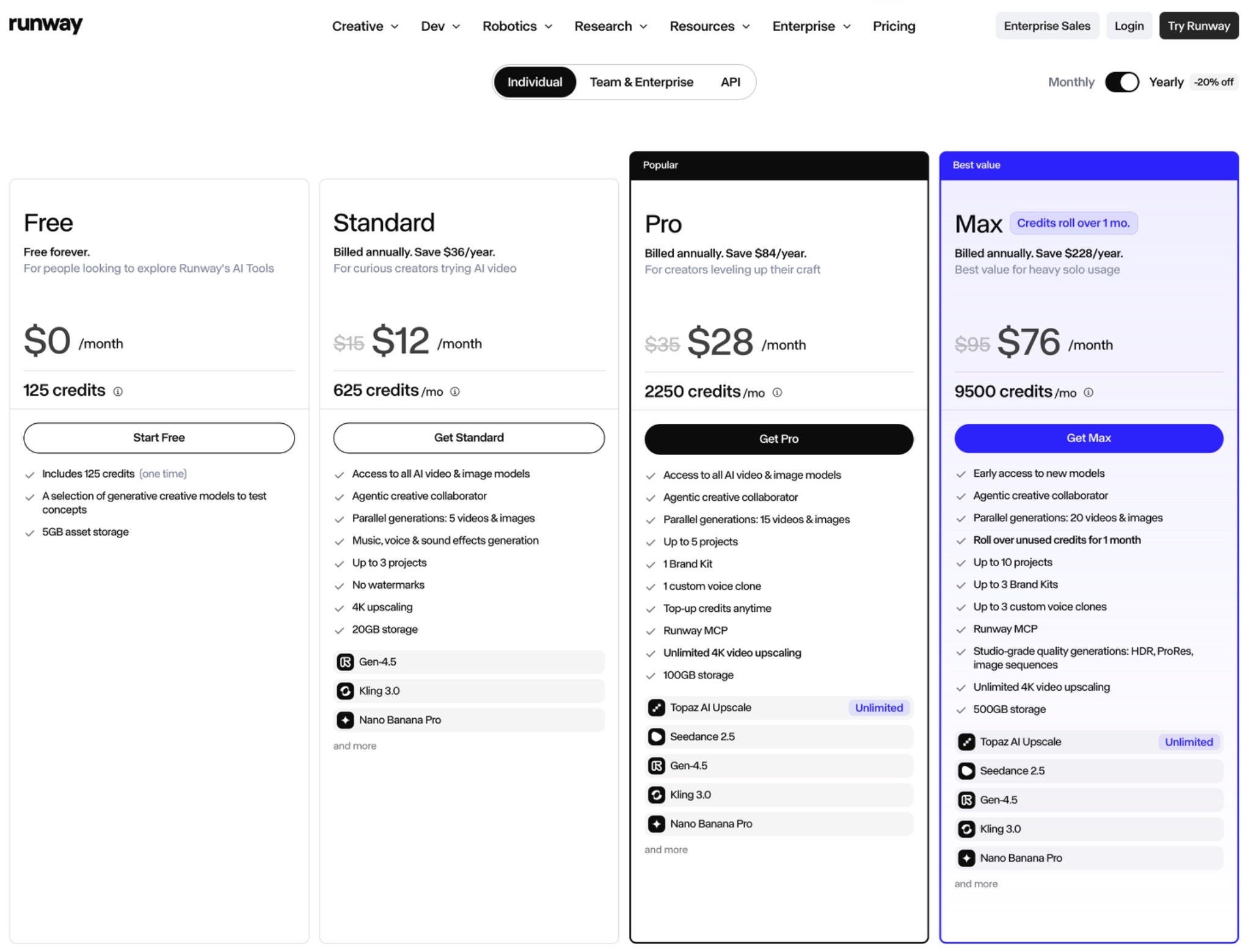
Runway allows up to one month of unused credits to roll over on Max and Team plans, while on Standard and Pro they expire monthly. As Rob Litterst points out, they are even making this a reason to upgrade.
A 1-month rollover mitigates the customer’s loss of capacity they already paid for.
10. Give customers spending controls
Vercel lets teams set spending thresholds and choose one or more actions when these are reached: send an alert, trigger a webhook, or pause production deployments. They are also transparent that spending can exceed the threshold before those actions take effect since checks run only every few minutes.
Let your customers choose how to balance service continuity and spending.
Build flexibility into the rules
The pattern across all these examples is flexibility with clear boundaries: Pay as you go (at a higher price), forgiving overages (up to a limit), a way to reset limits (with an expiration date).
Start with the billing rule that creates the most disputes or sales objections. Give customers a clear way to handle it. Measure the effect on adoption, retention, and cost to serve.
Make the rules easy to understand before the customer needs them.


