

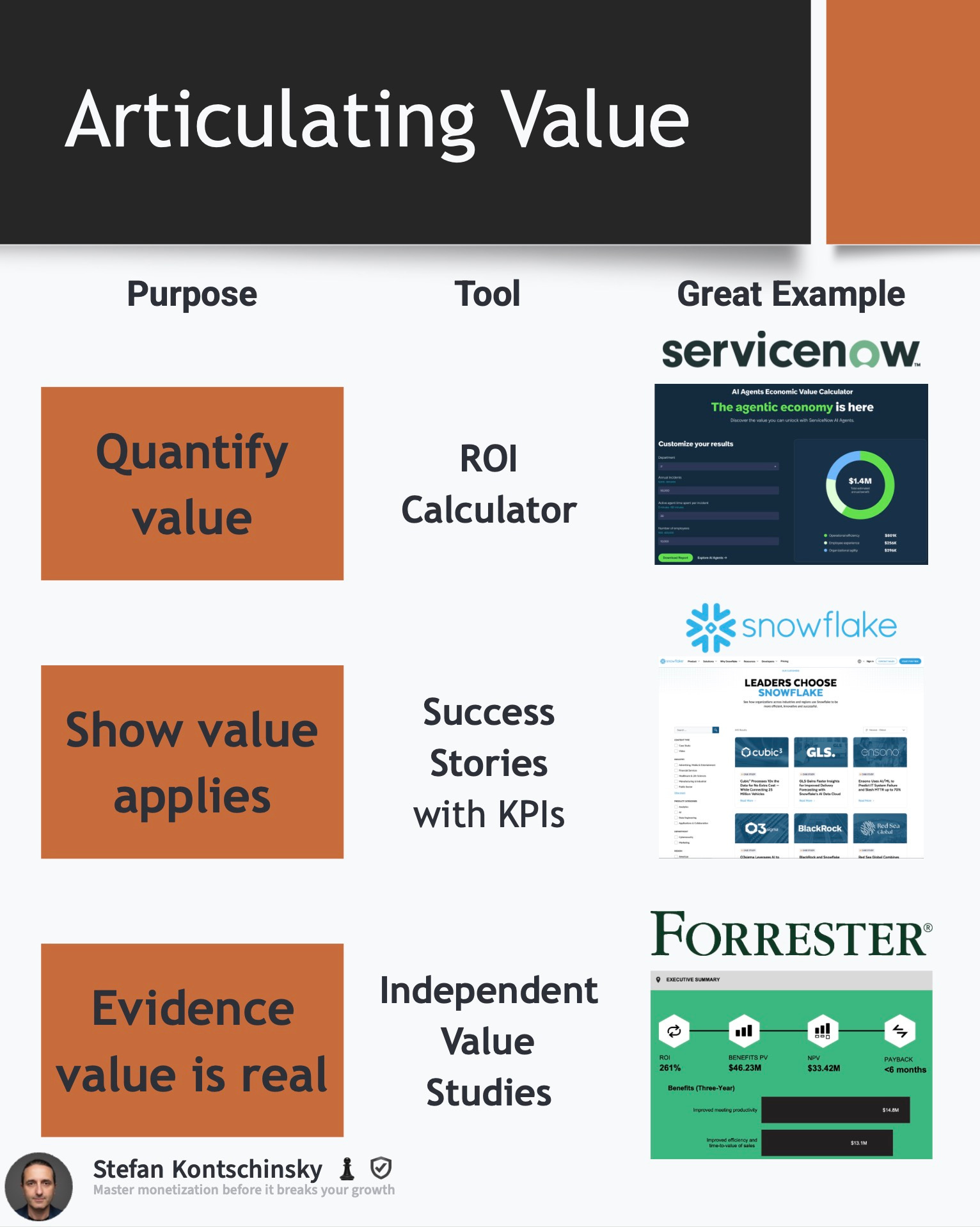
You can’t price based on value if your customer doesn’t perceive the value. Many companies struggle selling based on value for these three reasons: their buyers don’t see the value, don’t believe it applies to them, or don’t trust the ROI claim.
To capture your fair share of the value you create, you need to:
Explain value in a way a buyer can quantify quickly.
Personalize it so the buyer see this is my situation.
Validate it with evidence the buyer trusts.
Build a simple chain: value calculation → relevance → proof. Here are the three key tools to do it, with practical guidelines and real-world examples:
ROI calculators
Customer success stories
Independent value studies
1) ROI calculators
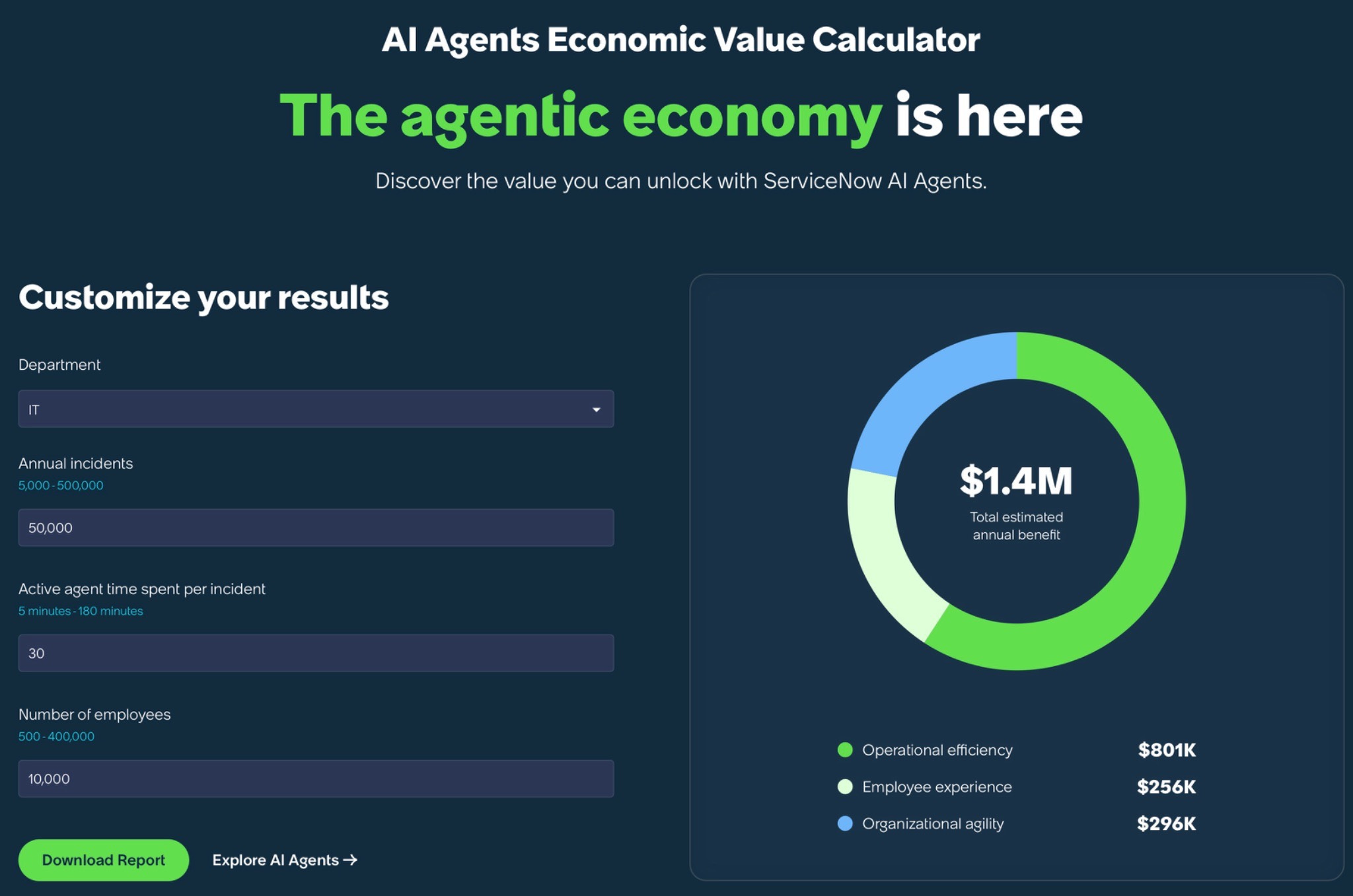
You need to articulate value with an ROI calculator. A good calculator teaches the value model, then shows the math with the buyer’s inputs, so they can see why buy.
A great example is ServiceNow’s Value Calculator: it
has 4 inputs to tailor value to a prospective buyer
Articulates value broken down into 3 buckets
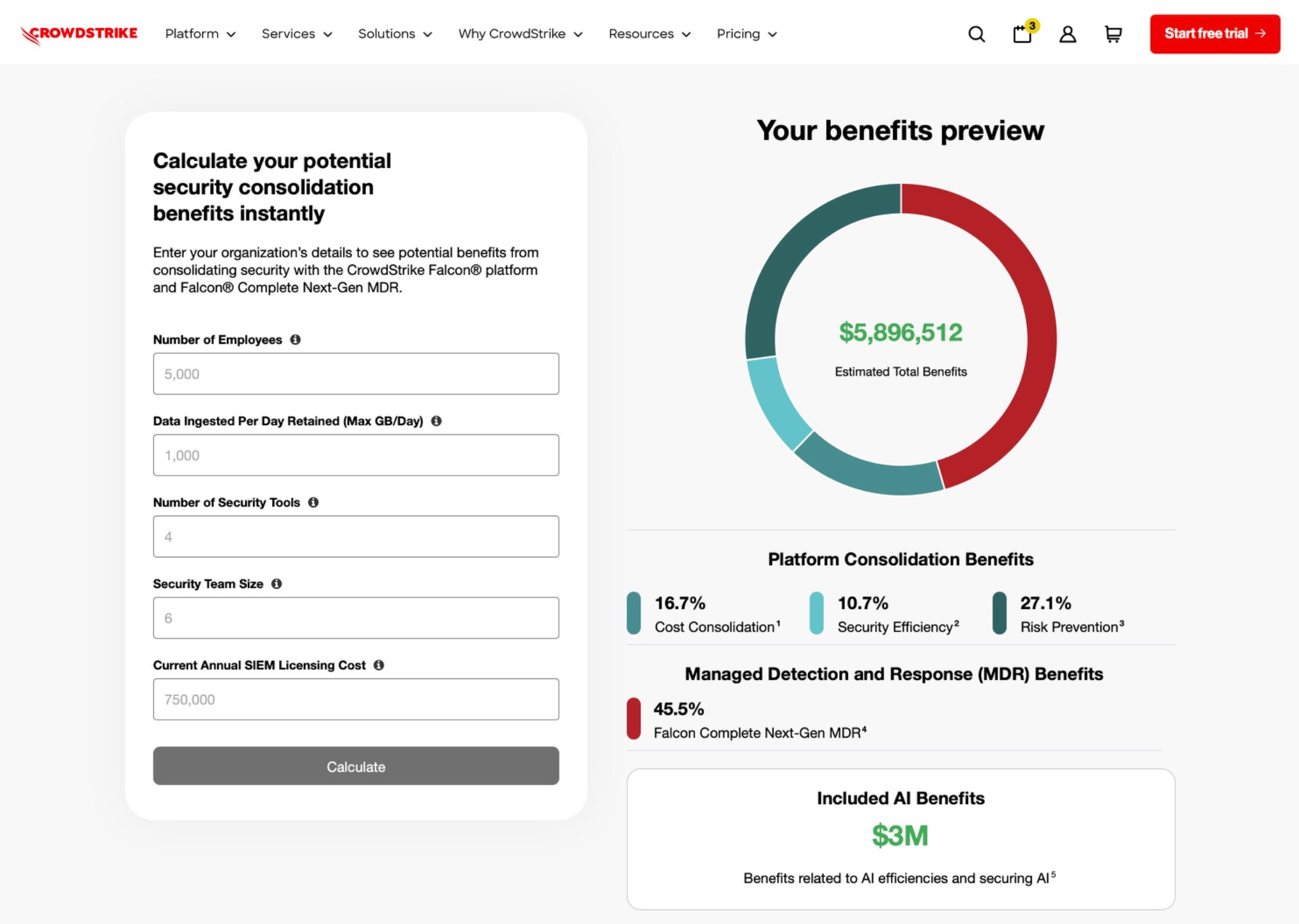
Another one is Crowdstrike’s Cybersecurity Consolidation Value Calculator:
Has 5 inputs to tailor value to the specific buyer
Articulates value in 4 buckets
The best ROI calculators follow these practices:
Focus on 3-4 business outcomes (e.g. cost saved, risk avoided, revenue gained)
Design the formula (e.g. savings = incidents * time/incident * % reduction)
Limit to 3-5 inputs (e.g. # incidents, time/incident, team size)
Use defensible default assumptions (e.g. industry ranges) for inputs
Pre-fill with typical values so the buyer can edit instead of starting blank
Common pitfalls to avoid
Hidden assumptions / unrealistic savings → ROI inflated, not credible
Too many outputs → Lack of focus
Too many inputs → The prospect moves on
2) Success Stories with KPIs
Make the value feel specific with customer stories that show achieved KPIs. Case studies are not just proof of value, they make value relevant. The buyer is asking: “Is this my world?”
Your story library should:
Lead with KPIs and time to value
(e.g. “Reduced onboarding from 14 days to 5 days in 90 days.”)Let prospects filter to match their situation
A great example are Snowflake’s 342 stories that can be filtered by industry, product categories, department and region.
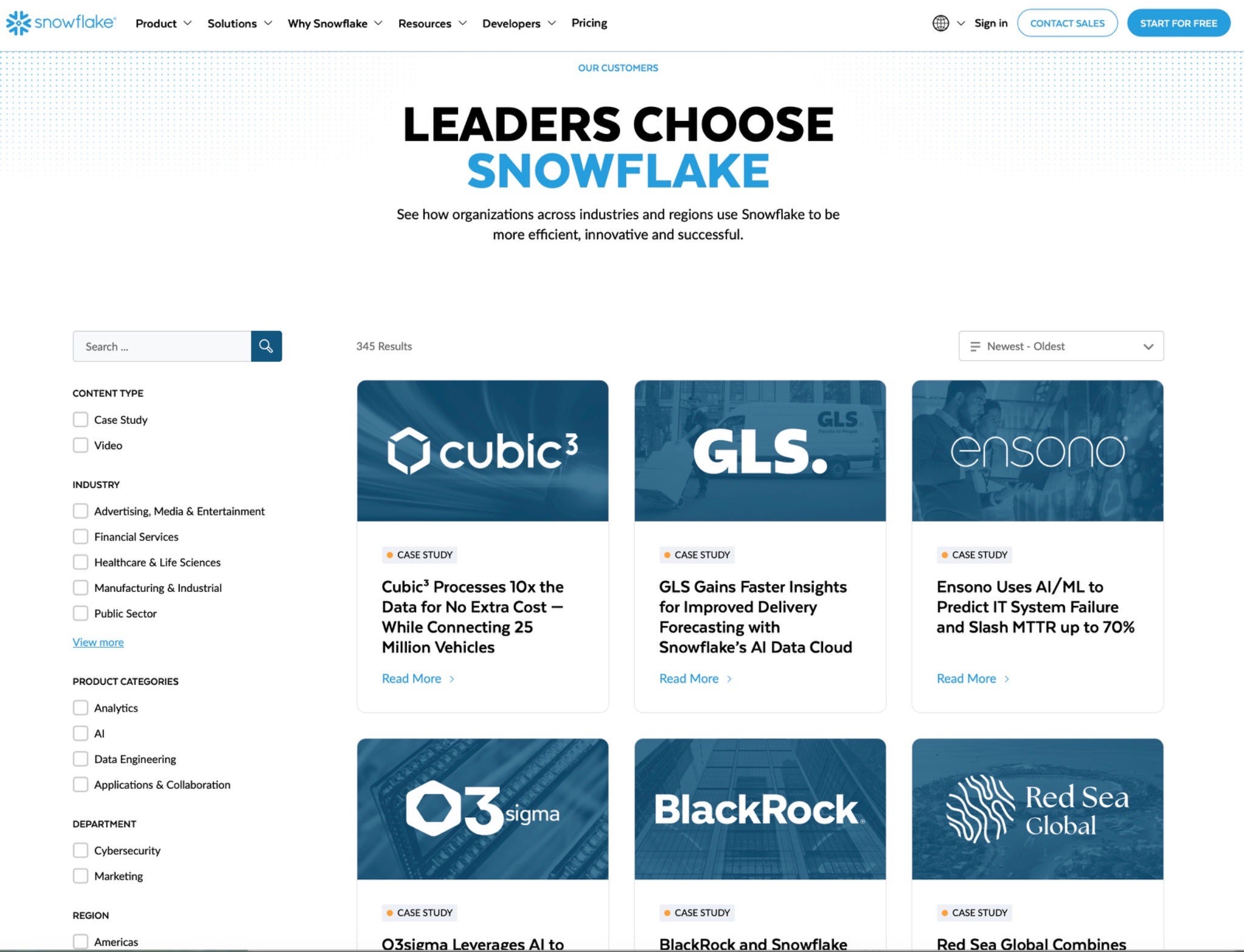
Each success story then shows the top 2 KPIs upfront. On the left, they show metadata conveniently: the industry, location and product used. Here is an example:

Many leaders do this well (e.g. Salesforce 231 success stories, Adobe’s 304 success stories) and allow filtering by product and industry.
Buyers are not going to scroll through dozens of stories, so filters and metadata matter! Think about how value varies, and consider these ones in this order:
Industry
Business size
Region
Product or use case
Buyer department or persona
Tech stack or integration context
Common pitfalls to avoid
Soft outcomes only → Lack of KPIs signals ROI is not tracked
KPIs not business-critical in industry → Hard to establish why it matters
Stories with no KPIs → Buyers want to know if they get the ROI you articulated
3) Independent Value Studies
The final step is to build trust through independent value verification. Buyers discount vendor claims. Third-party validation reduces that discount rate. It also gives internal champions something they can cite without looking biased.
Here are three companies offering them:
Forrester’s Total Economic Impact (TEI) studies, e.g. ServiceNow, Zoom
IDC Business Value (BV) white papers, e.g. Microsoft Dynamics 365 for Manufacturers, AWS
Nucleus Return on Investment (ROI) studies, e.g. SFDC at Pearson, Oracle at SNFC
Zoom’s TEI study shows the benefits over time by type, calculates ROI and payback period. The most important part is it is independent and Forrester states how many customers they interviewed, and what type of customers these are (see example).
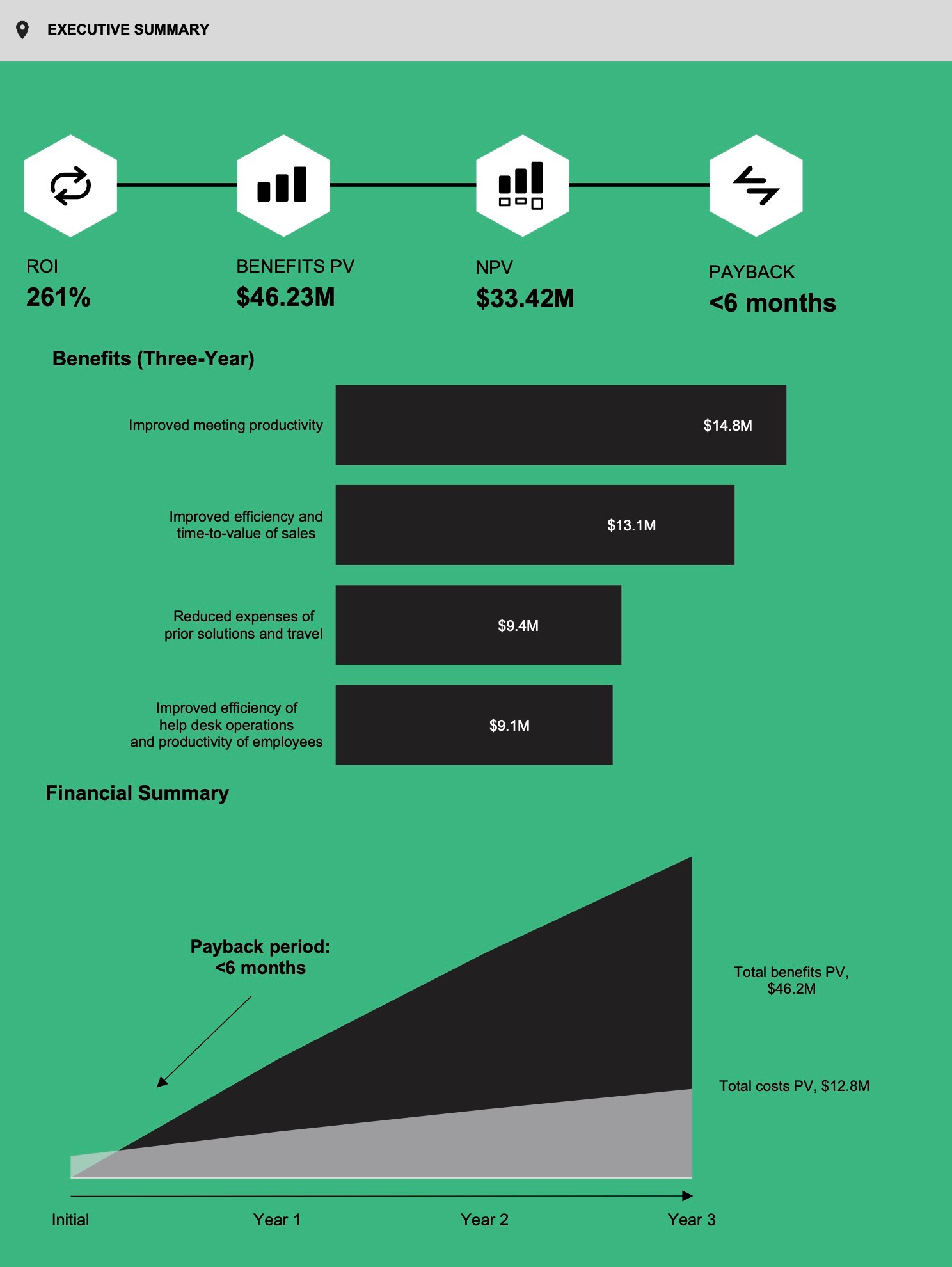
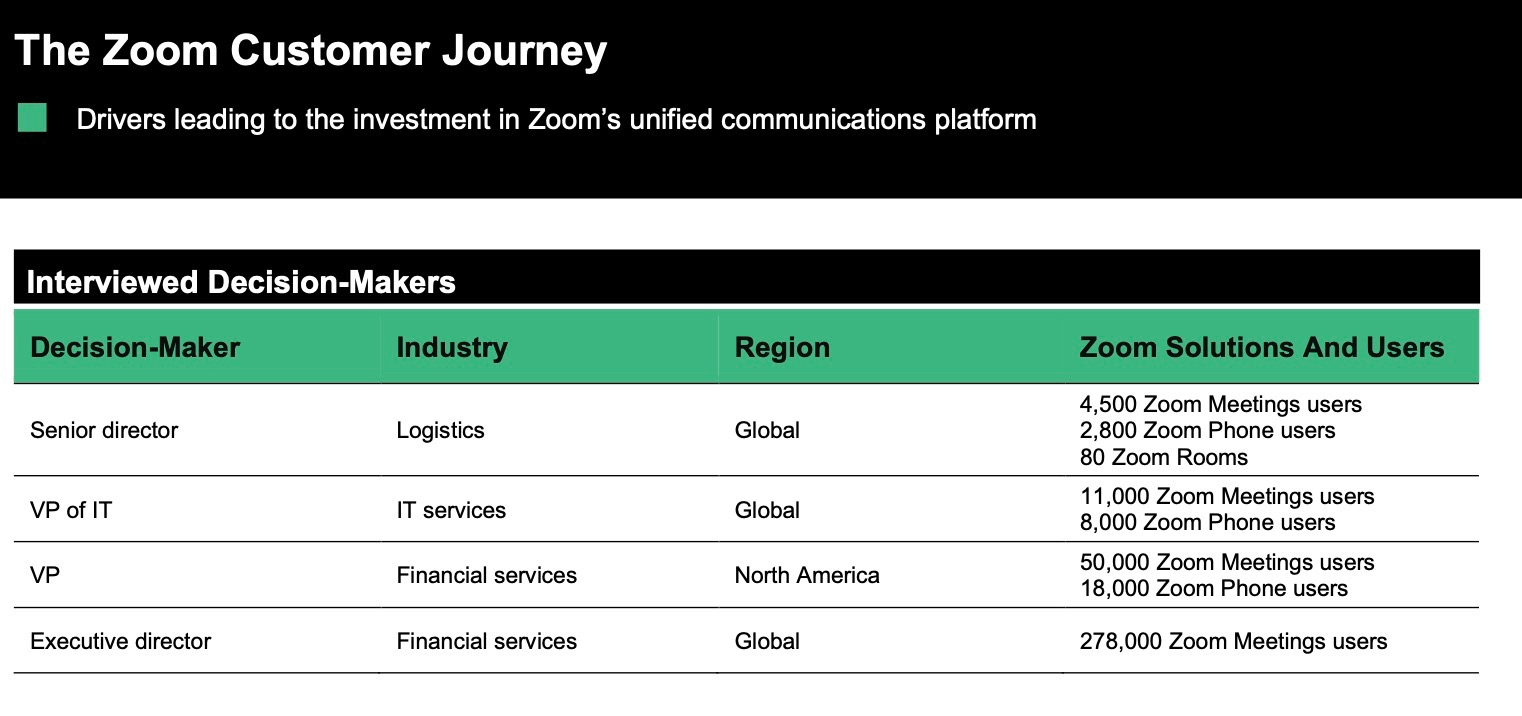
Independent value studies help you defend assumptions in your ROI calculator by establishing a credible value range for a category and solution type, verified by a trusted third party. It arms your sellers and champions with language their finance and procurement teams accept.
How to best use third-party studies:
Position the study as a benchmark (not a promise), a note its limitations
State what must be true for similar outcomes (baseline, adoption, scope)
Use it alongside your ROI calculator + success stories to increase credibility
Common pitfalls to avoid
Not acknowledging ranging outcomes → Perception it might be cherry picked
Citing ROI with no context → Prospect may not believe it applies to them
The system that works
The three components reinforce each other:
ROI calculator: “Here is the value model with your inputs.”
Filtered KPI stories: “Here are customers like you who achieved it.”
Independent verification: “Here is a third party validating the results are real.”
If you’re just starting
Build your calculator first and test with your next pitch (with buyer’s inputs)
Turn early wins into KPI stories once value is realized
Commission an independent study only after you have traction (they’re expensive)